
Why tallow soap
Tallow soap is a traditional bar made from rendered beef fat (tallow), lye and water. The lye turns the fat into soap, which is called saponification. What comes out is a hard, long-lasting bar with a creamy, stable lather. Tallow is a lot like the oils your own skin makes, so the bar locks in moisture and supports the skin barrier. It reduces tightness after washing and is gentle on dry or sensitive skin. Grass-fed tallow is naturally rich in vitamins A, D, E and K. Most of my bars also include coconut oil, shea butter, castor oil and olive oil as well. All of which have their own job to do.
My grass-fed beef fat comes from local farmers and it is rendered in my own kitchen. I melt it, strain out the impurities, chill it, and repeat at least three times for every batch until it's a pure, shelf-stable base. Rendering it myself in small batches means careful purification and no commercial additives. Then every bar made cures at least four weeks.
It rinses clean, not squeaky
Cold-process tallow soap keeps the glycerin it makes on its own, plus a little tallow that never turns into soap. Soapmakers call that the superfat. It's why the bar rinses clean without stripping your skin or leaving the tight, dry feeling a detergent bar does.
The butters and scrubs aren't soap
The tallow in the body butters and sugar scrubs never goes through saponification, so it stays tallow. It forms a protective layer on your skin that locks moisture in and keeps it from evaporating. Its fats are a lot like the oils your own skin makes, so it soaks in fast without clogging your pores.
Tallow first. The rest depends on the bar.
- TallowThe base ingredient of every bar, rendered by me multiple times for quality
- Coconut oilbubbly lather (most bars)
- Shea butterdeep conditioning (most bars)
- Olive and castor oila rich, creamy lather that cleans without stripping your skin (most bars)
- Clays and herbsnatural color
- Essential or natural fragrance oilsscent, picked to suit each bar
- Lyeturns the oils into soap and gets used up doing it, so none is left in a cured bar
A few bars skip the coconut, shea, castor and olive oil, so tallow is the only fat in them. Pick a scent on the soap page and its full ingredient list shows.
Four weeks on the rack is the difference
This is the difference between a rushed bar and a premium one. Over four weeks, the extra water evaporates and the saponification finishes, so you get a harder bar that lasts longer, is milder on your skin and keeps a stable, creamy lather. A lot of makers skip the full cure to ship faster, and a rushed bar can turn to mush or irritate your skin.
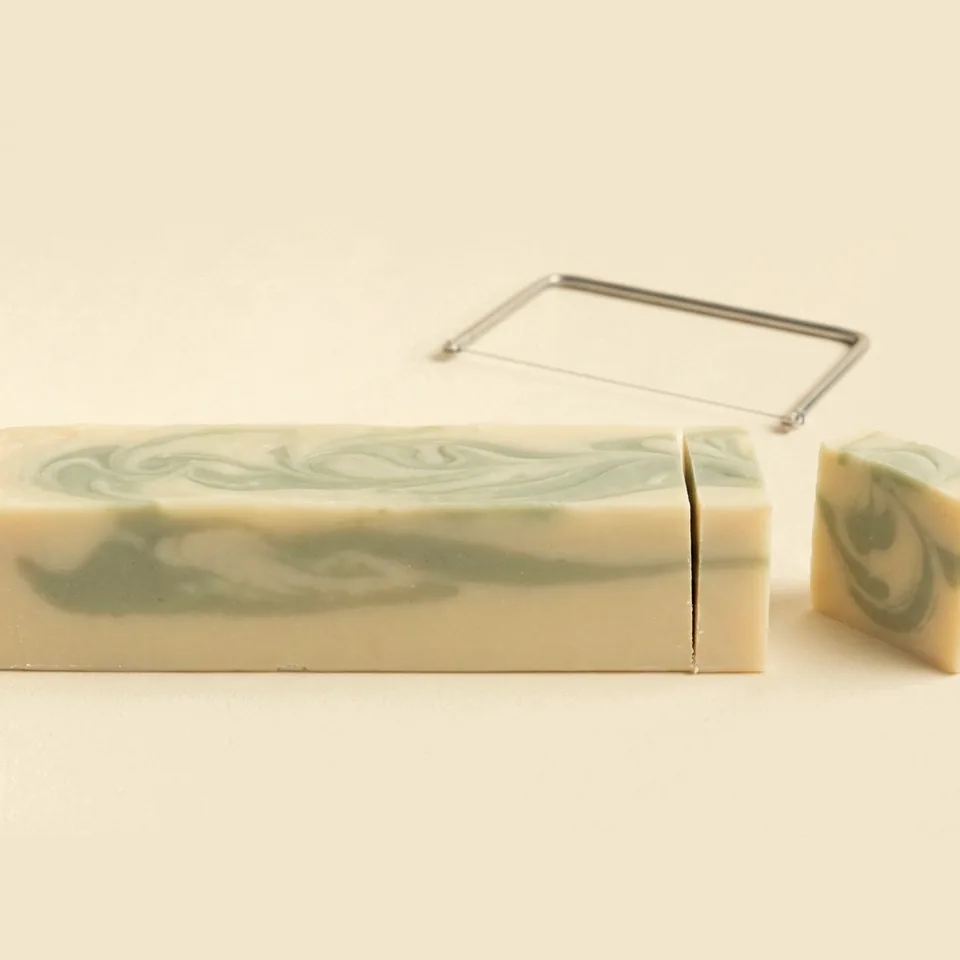
- Day 1Mixed by hand and poured into the loaf mold
- Day 2Cut into bars while they are still soft
- Weeks 1 to 4On the rack, where the water evaporates and the bar hardens
- Week 4 and onHard, mild and ready to ship
Every bar finishes its cure before it ships.
What's in a Hammett Heights bar
- Grass-fed tallow I render myself, filtered at least three times
- In most bars, coconut oil, shea butter, olive and castor oil
- Clays and herbs for color
- Essential oils or natural fragrance oils, named on every bar
What isn't included
- Synthetic dyes or micas
- Parabens, sulfates, phthalates
- Palm oils
- Detergents
Suet and trim fat: two jobs
Suet is the dense, hard fat from around the kidneys and loins. Trim fat is the softer, mixed fat cut away from the muscle during butchering. Both render into tallow, but they don't come out the same.
For skin care, suet is the one I want. It's naturally low in impurities and protein, so it renders into a nearly odorless, stable, nutrient-dense tallow that's close to your skin's own oils and absorbs well. That's what goes into the things that stay on your skin, the body butters and sugar scrubs. There it helps repair your skin's barrier, keeps it hydrated longer and feels smooth instead of greasy.
Trim fat has more myoglobin and connective tissue. It has a softer, less stable texture, so I don't use it in anything that stays on your skin. However, it's great for soap. It makes a hard bar with a creamy, stable lather that stays gentle once it's saponified.
Why the colors move
Clays and herbs react with the tallow a little differently every batch. One batch of lavender comes out grey, the next more purple or even pink. I would rather tell you that than pretend every bar is a copy. The scent is the same. The bar washes the same.
What I won't say
Soap can describe how skin looks and feels. It can't claim to treat or cure anything, and I don't. I can only share my own experiences and those of my customers, but I cannot make any claims. If a product page here ever reads like a medicine label, email me, because something went wrong.
Questions people ask
What is tallow soap?
Tallow soap is a bar made from rendered beef fat, lye and water. The lye turns the fat into soap, and what comes out after a four-week cure is a hard bar with a creamy lather. It is how soap was made for most of history, before detergents came along.
Is tallow soap good for your skin?
People like it because the bar keeps the glycerin it makes on its own, plus a little tallow that never turns into soap. That is why it rinses clean without the tight, dry feeling a detergent bar can leave, and why people with dry or sensitive skin often reach for it. It is soap, not a treatment, so I will not promise more than that.
What is tallow?
Tallow is simply rendered beef fat. I get grass-fed beef fat from local farmers, and my husband and I cut it into small pieces. Rendering means melting it down slowly, straining it and chilling it, then doing that again and again. I do that a minimum of three times, sometimes more, depending on the batch, until it runs clean and has no smell. All of mine is rendered in my own kitchen.
Does tallow soap smell like beef?
No. Properly rendered tallow has no smell, and the bar is scented with what I add to it. If a bar ever smelled like fat, the tallow was not rendered well enough.
Is there lye in it?
Yes. Lye is what turns oils into soap, and you can't make real soap without it. By the time a bar has cured, there is none left in it. Store bars made without lye are usually detergents, not soap.
Why four weeks?
A fresh bar is soft and still holds water. Over four weeks on the rack that water evaporates and the saponification finishes, so the bar is harder, lasts longer in the shower and is milder on skin. A rushed bar can turn to mush and irritate your skin.
What is the difference between suet and tallow?
Tallow is any beef fat once it has been rendered. Suet is one kind of fat, the dense, hard fat from around the kidneys and loins. It renders harder and cleaner, so it goes into the body butters and sugar scrubs. Trim fat, the softer fat cut away from the muscle, goes into soap.
Is tallow soap vegan?
No. Tallow is rendered beef fat. If you want a plant-only bar, this is not it.
Why does my bar not match the photo?
I am a small batch soap maker, not a large manufacturing facility. The colors come from clays and herbs, and they sometimes react a little differently with every batch. The scent is the same and the bar washes the same. The photo is just one batch.